✨ New Arrivals Just Dropped!Explore

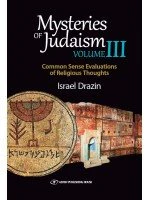
Mysteries of Judaism III
Common Sense Evaluations of Religious Thoughts
This eye-opening and thought-provoking book covers what the Torah states about life after death, the soul, the world to come, sin, repentance, rational and mystical views on immortality, resurrection, and the age of the universe, what if anything we must believe, changes that occurred in our concept of God, multiple violations of Torah laws by biblical persons (even prophets), misunderstandings about the Ten Commandments, prophecies that were not fulfilled, biblical and other ancient Jewish books that were neglected or rejected, humor in the Bible, the portrayal of biblical figures with their faults, and changing biblical laws and rabbinical customs.
It explains that the siddur is not what people think it is and contains mystical additions, and it offers different views about the value of prayer. It talks about Judaism’s first philosopher, contacts with non-Jewish cultures that changed Judaism, surprising elements in Ecclesiastes, and the nontraditional views of Orthodox thinkers such as Rashbam, Nachman Krochmal, J. B. Soloveitchik, David Hartman, Nathan Lopes Cardozo, and others.
It describes what most people do not know about Maimonides and clarifies his view on Midrashim, why they were written and their value today. It reveals that people are punished despite repentance and that false prophets can still prophesy. It examines the Torah and holy books, conversion, and intermarriage, and the impact of foreign cultures on Jewish practices and halakha. It analyses mysticism and atheism; the values of secular culture; the views of Moshe Chaim Luzzatto and his Mesillat Yesharim, and of Arnold Ehrlich; and it explores Nietzsche, Gersonides, and Maimonides’ views on faith and the Bible.
It explains that the siddur is not what people think it is and contains mystical additions, and it offers different views about the value of prayer. It talks about Judaism’s first philosopher, contacts with non-Jewish cultures that changed Judaism, surprising elements in Ecclesiastes, and the nontraditional views of Orthodox thinkers such as Rashbam, Nachman Krochmal, J. B. Soloveitchik, David Hartman, Nathan Lopes Cardozo, and others.
It describes what most people do not know about Maimonides and clarifies his view on Midrashim, why they were written and their value today. It reveals that people are punished despite repentance and that false prophets can still prophesy. It examines the Torah and holy books, conversion, and intermarriage, and the impact of foreign cultures on Jewish practices and halakha. It analyses mysticism and atheism; the values of secular culture; the views of Moshe Chaim Luzzatto and his Mesillat Yesharim, and of Arnold Ehrlich; and it explores Nietzsche, Gersonides, and Maimonides’ views on faith and the Bible.
$19.83
Mysteries of Judaism III—
$19.83
Product Information
Product Information
Shipping & Returns
Shipping & Returns
Description
Common Sense Evaluations of Religious Thoughts
This eye-opening and thought-provoking book covers what the Torah states about life after death, the soul, the world to come, sin, repentance, rational and mystical views on immortality, resurrection, and the age of the universe, what if anything we must believe, changes that occurred in our concept of God, multiple violations of Torah laws by biblical persons (even prophets), misunderstandings about the Ten Commandments, prophecies that were not fulfilled, biblical and other ancient Jewish books that were neglected or rejected, humor in the Bible, the portrayal of biblical figures with their faults, and changing biblical laws and rabbinical customs.
It explains that the siddur is not what people think it is and contains mystical additions, and it offers different views about the value of prayer. It talks about Judaism’s first philosopher, contacts with non-Jewish cultures that changed Judaism, surprising elements in Ecclesiastes, and the nontraditional views of Orthodox thinkers such as Rashbam, Nachman Krochmal, J. B. Soloveitchik, David Hartman, Nathan Lopes Cardozo, and others.
It describes what most people do not know about Maimonides and clarifies his view on Midrashim, why they were written and their value today. It reveals that people are punished despite repentance and that false prophets can still prophesy. It examines the Torah and holy books, conversion, and intermarriage, and the impact of foreign cultures on Jewish practices and halakha. It analyses mysticism and atheism; the values of secular culture; the views of Moshe Chaim Luzzatto and his Mesillat Yesharim, and of Arnold Ehrlich; and it explores Nietzsche, Gersonides, and Maimonides’ views on faith and the Bible.
It explains that the siddur is not what people think it is and contains mystical additions, and it offers different views about the value of prayer. It talks about Judaism’s first philosopher, contacts with non-Jewish cultures that changed Judaism, surprising elements in Ecclesiastes, and the nontraditional views of Orthodox thinkers such as Rashbam, Nachman Krochmal, J. B. Soloveitchik, David Hartman, Nathan Lopes Cardozo, and others.
It describes what most people do not know about Maimonides and clarifies his view on Midrashim, why they were written and their value today. It reveals that people are punished despite repentance and that false prophets can still prophesy. It examines the Torah and holy books, conversion, and intermarriage, and the impact of foreign cultures on Jewish practices and halakha. It analyses mysticism and atheism; the values of secular culture; the views of Moshe Chaim Luzzatto and his Mesillat Yesharim, and of Arnold Ehrlich; and it explores Nietzsche, Gersonides, and Maimonides’ views on faith and the Bible.